


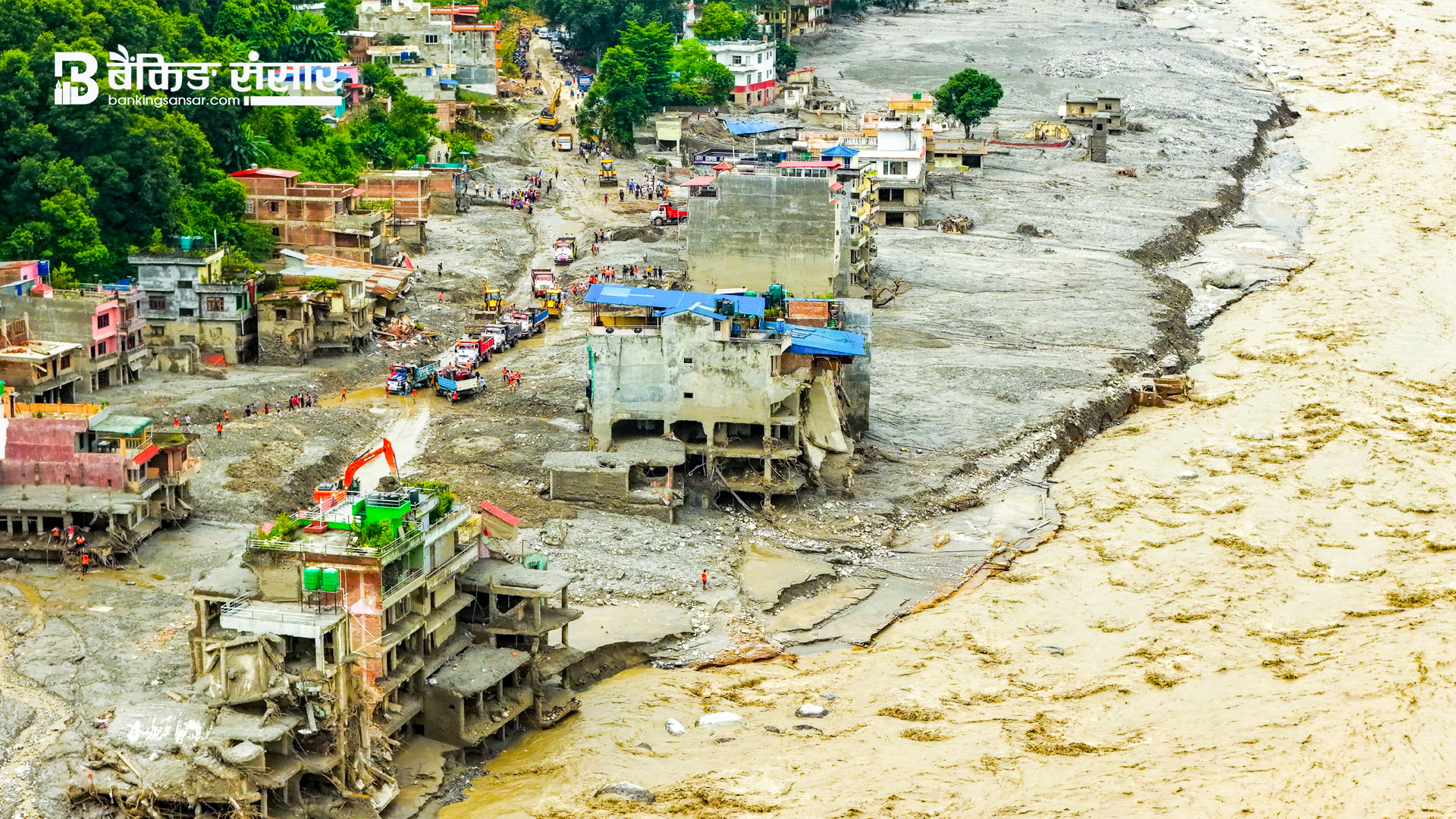
Kathmandu. The banking sector has provided significant financial support for relief, rescue and rehabilitation after the devastating floods in the Bhotekoshi River in Rasuwa caused huge loss of life and property. Banks that have direct relations with their customers and affected communities during the crisis have deposited millions of rupees in the government’s rescue fund as part of their corporate social responsibility.
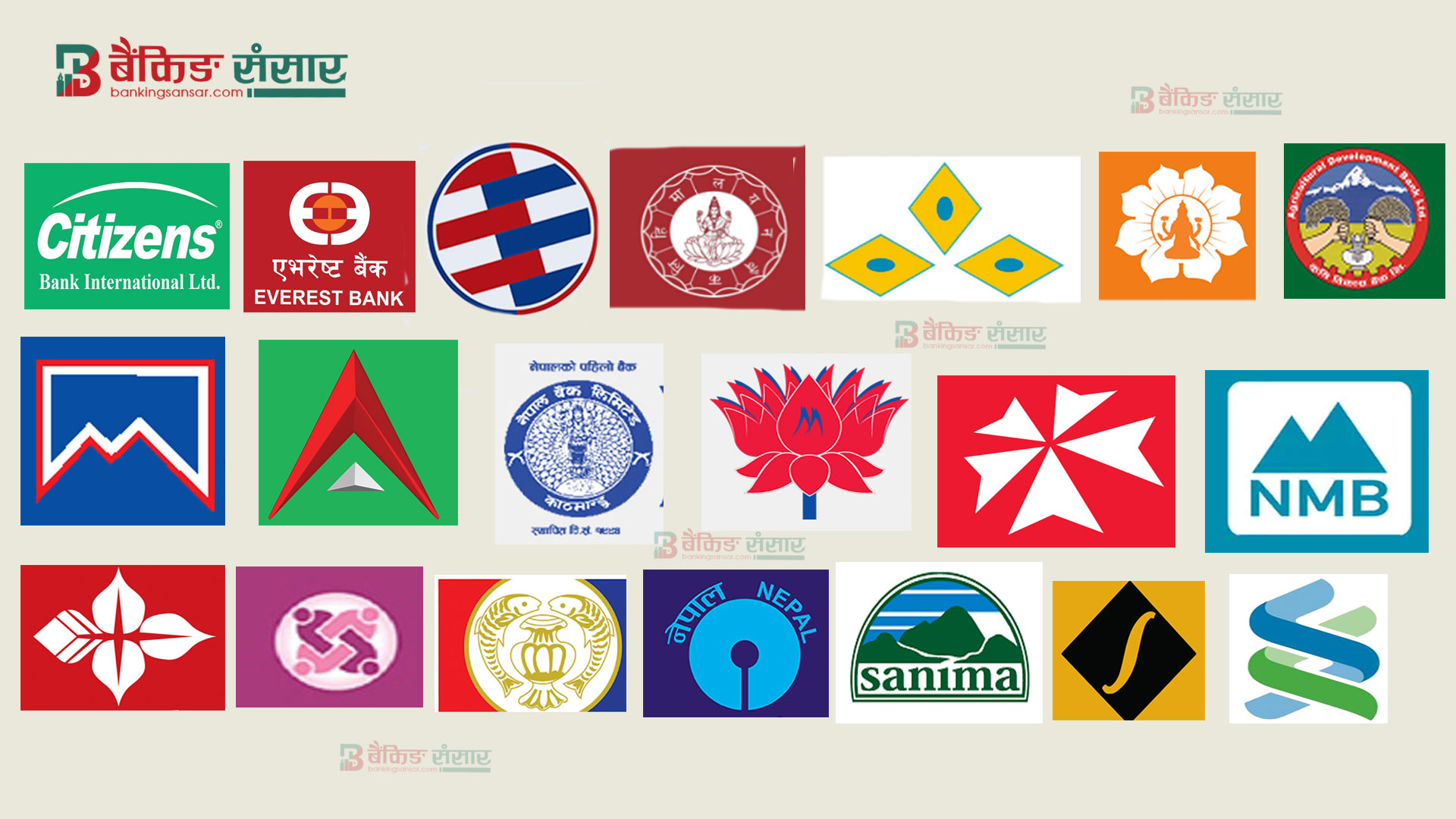
According to the details made public so far, 14 commercial banks and four development banks have contributed Rs 43.43 crore. Of this, the contribution of commercial banks is Rs 41.33 crore. Global IME Bank has emerged as the leader in terms of the amount of assistance. The bank has contributed Rs 5 crore.
Similarly, Nepal Investment Bank has contributed Rs 40.1 million, NMB Rs 3.51 million, Nepal Bank Rs 31.1 million, Prime Commercial Bank and Himalayan Bank Rs 30.1 million, Kumari Bank and Rastriya Banijya Bank Rs 30.1 million.
Likewise, Everest Bank and Siddhartha Bank contributed Rs 25.1 million, Sanima Bank Rs 22.5 crore, NIC Asia Bank Rs 22.1 million, Prabhu Bank Rs 21.11 million and Machhapuchchhre Bank Rs 20.1 million.
Shangrila Development Bank, Shine Resunga Development Bank and Muktinath Bikas Bank handed over Rs 50 lakhs and Kamana Sewa Bikas Bank Rs 25 lakhs to the development bank.
The banks’ assistance is not limited to cash. Some banks have also provided relief materials, rescue equipment, generators, power banks and food grains. For example, Kumari Bank has provided five AI-powered drones, three portable generators and 100 power banks worth about Rs 39 lakh along with Rs 3 crore in cash. The Agricultural Development Bank has also provided food items worth Rs 10 lakh to the affected families after a cash donation of Rs 3 crore.
Everest Bank has also contributed more than Rs 3,11,54,605 by adding the amount collected from the employees along with the institutional contribution. The bank’s institutional contribution is Rs 2.51 crore and the contribution of the employees is more than Rs 60,54,000.
Meanwhile, Chaudhary Foundation and Nabil Bank have announced a multi-phase relief and rehabilitation program worth about Rs 15 crore. Under this, immediate relief distribution, relief camps will be conducted, 500 temporary houses will be constructed and long-term rehabilitation programs will be started.
During times of disaster, the banking sector has not only become a financial institution but also an important aspect of mobilizing financial and humanitarian assistance during social crisis.
However, the responsibility of the bank will not be fulfilled only by giving relief money. Now that the source of income of the borrowers who have lost their houses, land, business and banking documents has also been affected in the floods, another big test in the banking sector has begun. It will be more important how the banks that have spent crores of rupees on relief will be able to provide loan restructuring, interest subvention, extension of repayment period and necessary financial facilitation for rehabilitation.