






CBFIN takes serious note of Nepal Investment Mega Bank scam

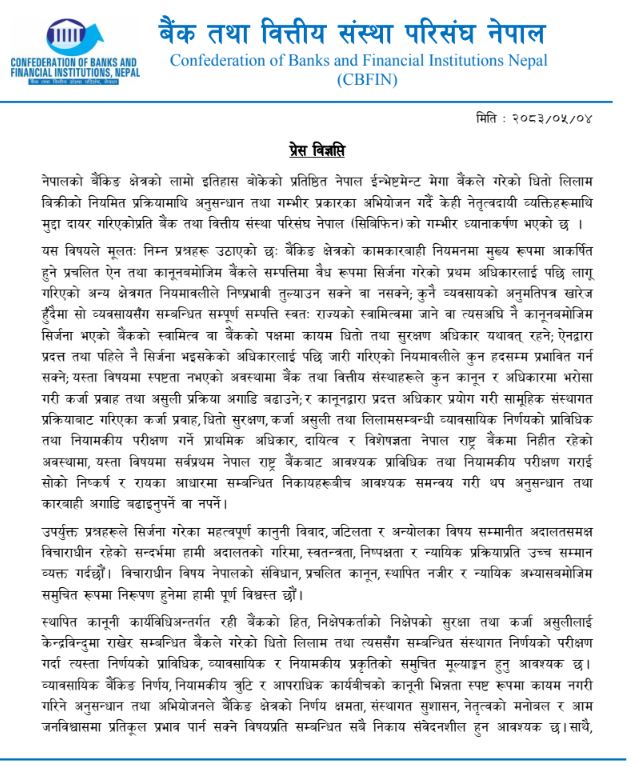
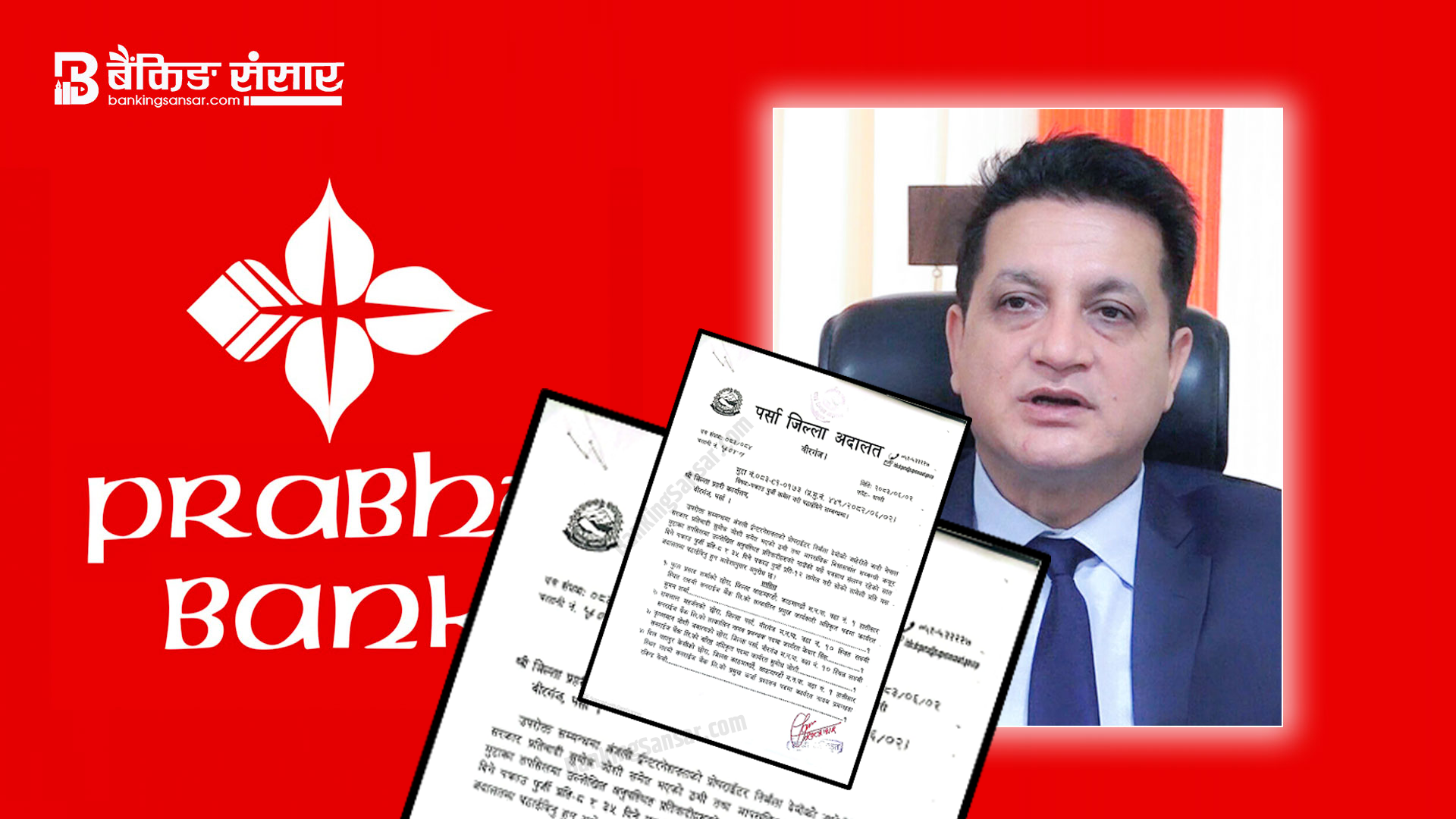
Kathmandu. KATHMANDU: The Confederation of Bank and Financial Institutions (CBFN) has drawn serious attention to the case of Nepal Investment Mega Bank. KATHMANDU: The attention of the CBFIN has been drawn to the investigation into the regular process of the sale of shares of the reputed Nepal Investment Mega Bank, which has a long history in the banking sector of Nepal, and the filing of cases against some key officials in the country.

The issue basically raises the following questions: “Whether the first right legitimately created by the Bank over property under the prevailing Acts and Laws which are primarily attracted to the regulation of the affairs of the banking sector can be nullified by other sectoral regulations subsequently; With the revocation of the license of any business, all the property related to that business automatically becomes the ownership of the state or the ownership of the bank created in accordance with the law or the collateral and security rights maintained in favour of the bank remain intact; To what extent the Regulations issued later may affect the rights already conferred and already created by the Act; In the absence of clarity on such issues, on what laws and rights should the banks and financial institutions rely on to proceed with the loan disbursement and recovery process; In a situation where the Nepal Rastra Bank has the primary authority, responsibility and expertise to carry out technical and regulatory audit of the business decisions related to loan disbursement, collateral security, loan recovery and auction made through collective institutional process in exercise of the powers conferred by the law. Not deserved. ‘

“We express our high regard for the dignity, independence, impartiality and judicial process of the court at a time when the important legal disputes, complexities and confusion created by the above questions are sub judice before the honorable court. We are confident that the sub judice would be adequately resolved in accordance with the Constitution of Nepal, prevailing laws, established precedents and judicial practices. ‘

“The technical, commercial and regulatory nature of such decisions should be properly evaluated while examining the collateral auction and related institutional decisions carried out by the concerned banks keeping in mind the interest of the banks, the security of depositors’ deposits and loan recovery under the established legal procedures,” he said. All agencies concerned need to be sensitive to the impact of investigation and prosecution on the decision-making capacity of the banking sector, corporate governance, morale of the leadership and public confidence without clearly establishing the legal distinction between commercial banking decisions, regulatory errors and criminal acts. In addition, Cibfin believes that the confidentiality and sensitivity of customer information, internal bank decisions, business details and personal facts obtained during the course of the investigation should be appropriately protected in accordance with the law. ‘

This incident has also raised serious policy questions related to the security and risk bearing of the loans to be issued in the national priority and directed sectors based on government licenses such as hydropower, telecommunication, infrastructure. If the latest licensing decision is to determine the ownership or security rights already created in banks, then there needs to be clarity on how banks that issue loans to such areas will assess risk and who will ultimately bear the additional risk arising from loans prioritized or mandated by the state or regulatory body. We would like to draw the serious attention of the Government of Nepal and its subordinate bodies to the long-term impact of such legal and policy uncertainties on the flow of credit, the cost of credit, financial stability and the overall economy in the future in the areas of national priority. In addition, in the absence of a clear criminal intention or objective basis for the criminal act, it is necessary to discourage the tendency to criminalize the transactions, liabilities and rights between banks, borrowers and the Government of Nepal and resolve them through the prevailing civil, commercial and regulatory processes. See also:

PR_by_CBFIN_About_NIMBIssue_4Bhadra2083

Banking Sansar Mobile App

Leave you comment