





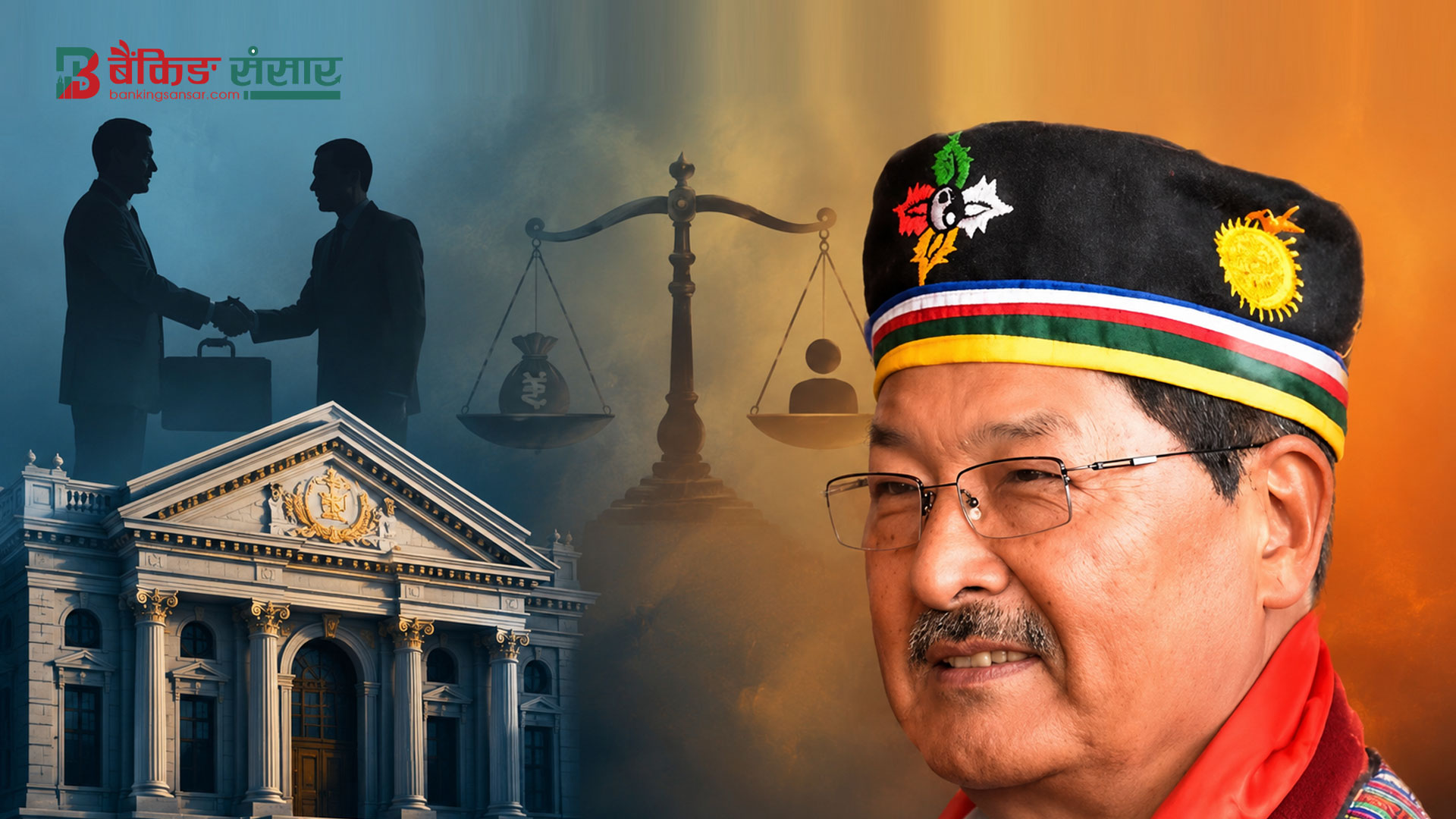
Kathmandu. Parshuram Tamang, a lawmaker from the ruling Nepal Rastra Bank, has said that the trend of senior officials of the Nepal Rastra Bank (NRB) going to private banks after retirement and coming back to the leadership level of the central bank from the private banks has increased. During the discussion on the bill designed to amend the Nepal Rastra Bank Act, 2058 BS in the Finance Committee of the House of Representatives, he said such tendency has created conflict of interest.
He stressed that there should be a clear provision on how to address the issue while amending the NRB Act. Stating that there was talk in the market that some banks were established with the involvement of NRB employees, he said that a solution to such issues should be sought legally.
He said, “What is seen here is that the special category officers of the Rastra Bank go to the private bank after retirement, and the private ones try to come back to the governing body of the Rastra Bank.” Where did this conflict of interest come from? I’m not saying it with a bad intention, it’s just that it’s going on in the outside market. Since that is the case, the NRB Act is currently being amended, how can we solve this issue? Even when the bank is opened, the employees of the Rastra Bank have opened it together, in the market. This is not an accusation, do not understand it in this sense, but now while amending the NRB Act, we should pay attention, is there a conflict of interest here? If so, what are they? We need to pay more attention to how we look at it. ’
He also said that the recently released monetary policy by the Nepal Rastra Bank has not been as per the expectation. He pointed out the need to make the monetary policy-making process more autonomous. He said that along with the institutional autonomy of the NRB, the monetary policy should also be prepared through a separate committee.